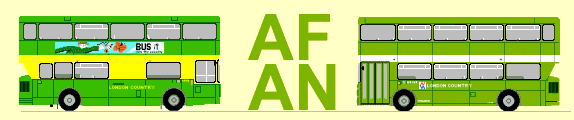
LONDON COUNTRY AF and AN classes.This page created 18th March 2001 by Ian Smith , updated 6th June 2001. Best on 800*600.
AN: Leyland AtlanteansPart 2: Tours, Tenders, secondhand buses, and privatisationTours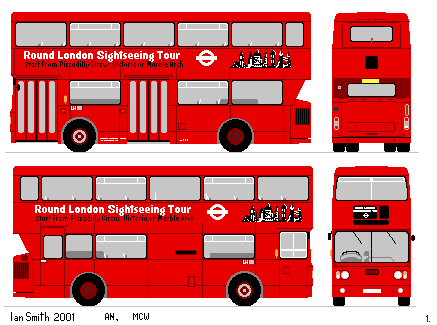 Although in the early 1980's London Transport
still held a monopoly on sight-seeing services within London,
it had since 1963 often hired in contractors to provide vehicles and crews for such services on its behalf.
During the seventies LT had hired Samuelson's to run the Round London Sightseeing Tour,
which it had done initially with 8ft wide open-top Guy-chassis RTs from East Kent.
After that had come ex-Midland Red D9s, open-top OM1-7 and closed-top OM 8-10,
plus an ex-Northern General Routemaster and the rejuvenated ST922.
Although in the early 1980's London Transport
still held a monopoly on sight-seeing services within London,
it had since 1963 often hired in contractors to provide vehicles and crews for such services on its behalf.
During the seventies LT had hired Samuelson's to run the Round London Sightseeing Tour,
which it had done initially with 8ft wide open-top Guy-chassis RTs from East Kent.
After that had come ex-Midland Red D9s, open-top OM1-7 and closed-top OM 8-10,
plus an ex-Northern General Routemaster and the rejuvenated ST922.
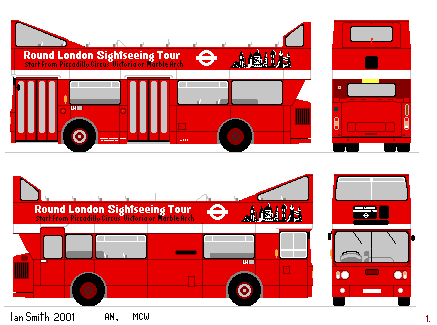 Now between 1982 and 1984 London Country added five of the MCW-bodied Atlanteans to the fray,
with open-top AN106 and 110 and closed-top AN108, 109, and 116.
They were repainted in London Transport red,
with Round London Sightseeing Tour posters and LT bullseyes.
They operated out of Leatherhead garage,
with the open-toppers and some of the closed top version going into store at Crawley during the winters.
1985 was their last operating season,
as in 1986 London Transport revived its own operations with the London Coaches RMs.
Most were repainted to London Country green with pale green band in May 1986,
but AN116 managed to hang on to its red livery for another two years!
Now between 1982 and 1984 London Country added five of the MCW-bodied Atlanteans to the fray,
with open-top AN106 and 110 and closed-top AN108, 109, and 116.
They were repainted in London Transport red,
with Round London Sightseeing Tour posters and LT bullseyes.
They operated out of Leatherhead garage,
with the open-toppers and some of the closed top version going into store at Crawley during the winters.
1985 was their last operating season,
as in 1986 London Transport revived its own operations with the London Coaches RMs.
Most were repainted to London Country green with pale green band in May 1986,
but AN116 managed to hang on to its red livery for another two years!
London Country also operated three of the oldest Park Royal Atlanteans (AN 5, 10, 11) as the London Crusader. They were repainted in May 1983 and operated during the summers of 1983 to 85, being repainted to Green Line white/green dual-purpose livery in June 1986. The ex-Southdown buses: AN294-305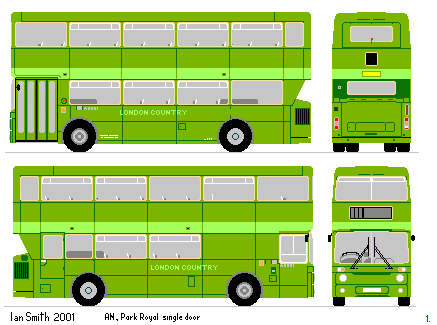 One of the provisions of the 1984 London Regional Transport Act
led to the tendering of London Regional Transport services.
This included not only traditional "red" routes,
but "green" services largely within the GLC area, such as the 403.
In preparation for this London Country began vying for tenders
both within London and for its "own" London routes.
Chelsham garage won the operation of its own 403, much to its relief,
but also won the in-London 127/A and 197. This required more buses,
but not expensive new ones.
One of the provisions of the 1984 London Regional Transport Act
led to the tendering of London Regional Transport services.
This included not only traditional "red" routes,
but "green" services largely within the GLC area, such as the 403.
In preparation for this London Country began vying for tenders
both within London and for its "own" London routes.
Chelsham garage won the operation of its own 403, much to its relief,
but also won the in-London 127/A and 197. This required more buses,
but not expensive new ones.
It found what it needed from Southdown,
in the shape of twelve Park Royal bodied Atlanteans.
They were received at Grays between December 1985 and February 1986,
and went into service at Chelsham in March (and April).
Most remained at Chelsham until October 1989 when the garage lost
not only the in-town contracts but also the 403,
and thus lost its main raison d-etre.
Most of them then departed to the north-west,
to the Bee-Line Buzz Co in Manchester,
for another round of tenderising.
The ex-Strathclyde Alexander buses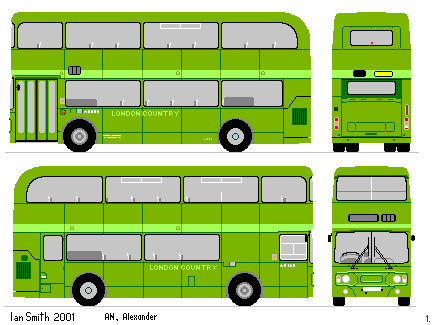 The next purchase of secondhand buses was something rather different.
Like several other large concerns Strathclyde PTE was slimming down to
face the onslaughts of tendering, and sold some of their Alexander bodied
Atlanteans, with huge panoramic windows, to London Country amongst others.
Purchased in April 1986, they were prepared for service by Strathclyde,
including a repaint into London Country livery -
now with a pale green band and fleetname, and no NBC logo.
The next purchase of secondhand buses was something rather different.
Like several other large concerns Strathclyde PTE was slimming down to
face the onslaughts of tendering, and sold some of their Alexander bodied
Atlanteans, with huge panoramic windows, to London Country amongst others.
Purchased in April 1986, they were prepared for service by Strathclyde,
including a repaint into London Country livery -
now with a pale green band and fleetname, and no NBC logo.
Most of them went into service in the north-eastern New Towns,
in Hatfield particularly,
in some cases after an initial excursion to Epsom
on the 406F Derby Day specials from Dorking.
Others were scattered around the system.
The ex-Tyneside buses, AN346-356At about the same time more Park Royal bodied buses became available from Northern General, and several were bought in June 1986. Some were received at Grays, and some went first to Alder Valley Engineering, before going into service at Chelsham.
London Country DividedIn September 1986 London Country was broken up into four sections, as the government had decreed that the larger NBC companies werte "not good for competition", and besides, the smaller companies made tastier morsels for takeovers. Each sector contained at least one decent urban area with scope for fares revenue, as well as rural sections that would be dependent on County Council tenders.The original ANs were fairly evenly divided between the four companies, with the second-hand examples mainly clumped according to the need that caused their acquisition. The bus companies responded to their new situation with varying degrees of enthusiasm, depending perhaps whether they saw their market as under threat or as an opportunity. London Country South-WestLCSW had centres in Guildford and Crawley, the latter with its Gatwick traffic, plus trunk routes over the North Downs to Croydon.ex-Manchester AN357-387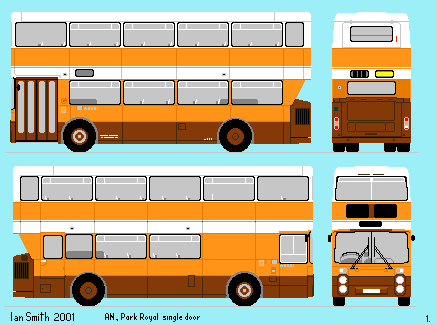 For tendered services won in north-west Surrey and the London fringes
London Country South-West suddenly needed a lot of cheap buses.
It found them from Greater Manchester Buses,
who were disposing of some 600 buses in order to slim down for tender battles.
They were Park Royal bodied Atlanteans, rather elderly, and with SELNEC
design features: the Manchester 3-box front display
and the standard Manchester dash and headlamp cluster were the most obvious.
They were still in GMT livery when bought. The first arrived in January 1987,
and were needed yesterday. While some went of to Gatwick Engineering
(the old London Country Tinsley Green works at Crawley), and some
to Alder Valley Engineering, for preparation and repaint,
a few found themselves pressed into service from Leatherhead still wearing
tatty GMT livery, on a Hounslow LRT service.
Not what the citizens of Surrey had expected from competitive tendering!
(The same colours - on more Atlanteans or Fleetlines from GMB - appeared elsewhere
around London for similar reasons, in Harrow (Harrow Buses), Bexleyheath (Bexleybus)
and Romford (Frontrunner South-East).)
For tendered services won in north-west Surrey and the London fringes
London Country South-West suddenly needed a lot of cheap buses.
It found them from Greater Manchester Buses,
who were disposing of some 600 buses in order to slim down for tender battles.
They were Park Royal bodied Atlanteans, rather elderly, and with SELNEC
design features: the Manchester 3-box front display
and the standard Manchester dash and headlamp cluster were the most obvious.
They were still in GMT livery when bought. The first arrived in January 1987,
and were needed yesterday. While some went of to Gatwick Engineering
(the old London Country Tinsley Green works at Crawley), and some
to Alder Valley Engineering, for preparation and repaint,
a few found themselves pressed into service from Leatherhead still wearing
tatty GMT livery, on a Hounslow LRT service.
Not what the citizens of Surrey had expected from competitive tendering!
(The same colours - on more Atlanteans or Fleetlines from GMB - appeared elsewhere
around London for similar reasons, in Harrow (Harrow Buses), Bexleyheath (Bexleybus)
and Romford (Frontrunner South-East).)
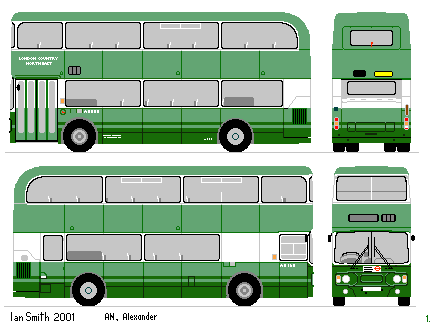
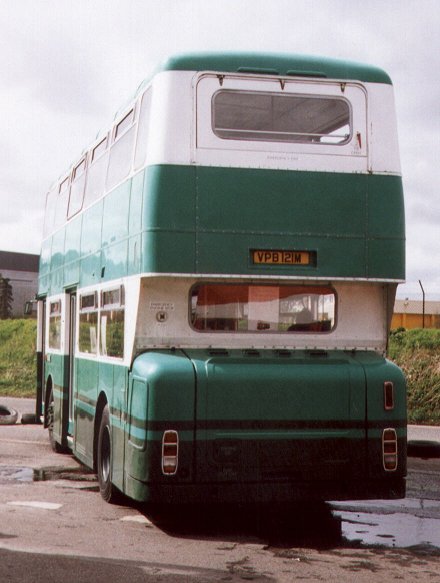
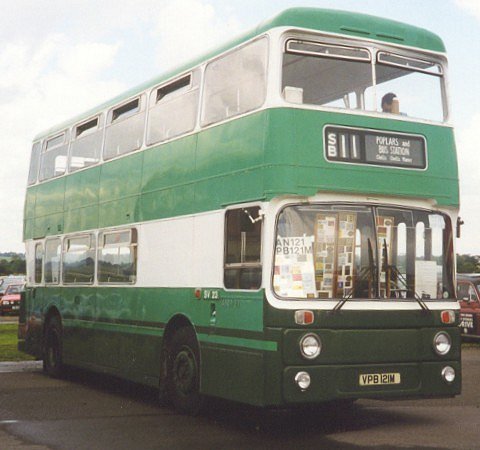
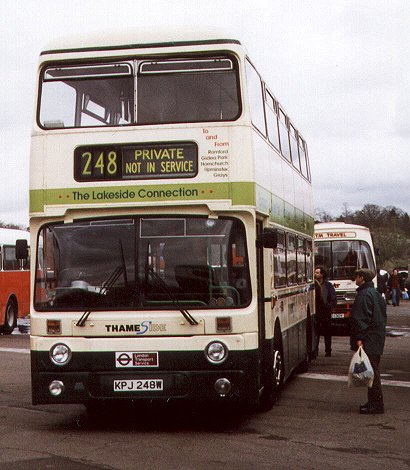
London Country North-EastLCNE included the Hertfordshire New Towns, Stevenage, Welwyn Garden City, Hatfield, Hertford and Harlow, as well as the Thameside traffic around isolated Grays.LCNE was the first to adopt a new livery, a fairly conservative - and dull - dark green, white and pale green. It too was in the LRT tendering business, with the 313 from Chingford to Potters Bar, operated by Hatfield.
LCNE was privatised to AJS Holdings in 1988, and a strike over worsened working conditions
resulted in the loss of three LRT tenders: the 313 was lost to Grey-Green.
LCNE 'rationalised' its fleet accordingly, 62 ANs being disposed of during June and July.
Preserved AN121 displays the LCNE livery at the Cobham Open Day and North Weald Rally, 1998. AN121 has its own web-site.
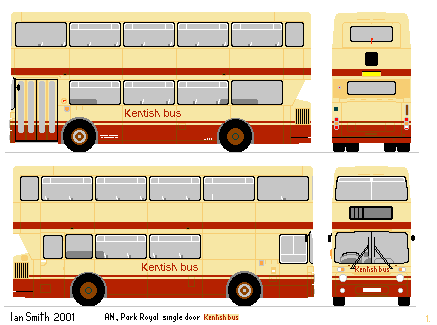
London Country South-East: Kentish BusLCSE was largely based around Dartford and Gravesend, with a rural element hanging on around the Darent Valley and Sevenoaks.
South-East, with probably the worst geographical set-up, decided to go for expansion through tendering. Rebranded very quickly (February 1987) as Kentish Bus, it swept away all remnants of London Green with a new livery of primrose and maroon, new fleet numbers and new route numbers (that soon reverted, Kentish man and woman being very conservative). Swanley continued to provide Atlanteans, including many of the ex-Strathclyde examples, for LRT tendered routes such as the 51.
Kentish Bus began to invest in new Olympians,
and substantial withdrawals of its Atlanteans started during March 1988.
Others continued to be repainted into maroon and cream,
including Strathclyde immigrants.
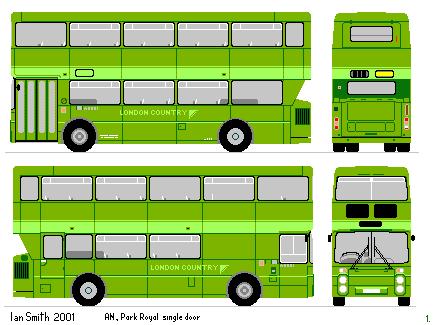
London Country North WestLondon Country North-West contained Watford, and part of the Uxbridge - Hemel Hempstead - Watford - St Albans conurbation, with Heathrow close by.ex-Manchester AN800-815LCNW, rather late in the day, also bought sixteen of the ex-Manchester Park Royal bodied Atlanteans, AN800-815, in the autumn of 1986. They were readily distinguishable by their Manchester style displays on the front, and their different dash and headlight treatment. They were repainted into London Country colours of NBC green with pale green band, but also acquired thin lining bands in pale green, and the addition of North-West arrow logos after the London Country fleetname.
Privatisation, Sell-offs and ReorganisationsCounty BusIn 1989 London Country NE was divided up into County Bus & Coach and Sovereign Bus & Coach. County Bus kept some Atlanteans, for services from Grays and for work picked along the Lea Valley up after the demise of London Buses' Forest District in 1991.County Bus passed through various ownerships (Lynton Travel, West Midlands Travel and Cowie Group) to become Arriva Herts and Essex.
Preserved AN248 in the nice Thameside livery used for services based on Grays. Seen at North Weald Rally in June 1998.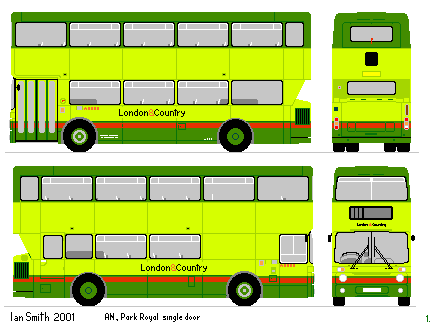
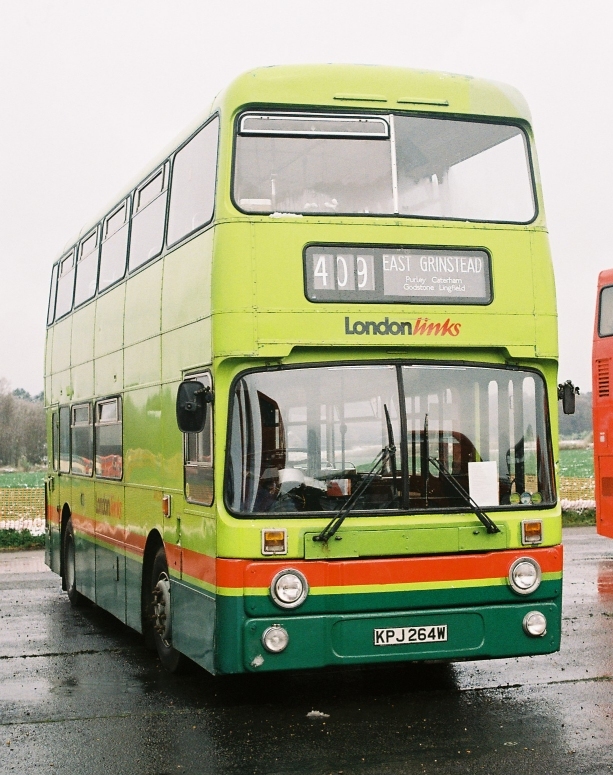
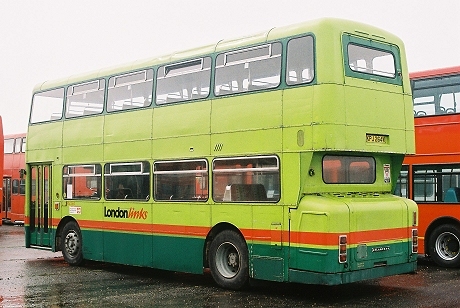
London & Country, LondonlinksThe Drawlane Group bought LCSW in February 1998, and became British Bus in December 1992. LCSW was rebranded as London & Country in 1993, and buses began to acquire its lovely two-tone green and red livery. Some of the Atlanteans remained in service until the late 1990s. Others found their way into the Londonlinks operation in January 1995 by dint of being part of London & Country's tendered operations within London, and subsequently found themselves with Kentish Bus.
Preserved AN264 has been restored to Londonlinks livery, and appeared so at the Cobham Museum Open Day in April 2008.
Kentish BusKentish Bus was bought by ProudMutual in 1988, and became part of British Bus. Cowie Group took over in June 1996, and the transformation to Arriva Kent Thameside began in November 1997. Some Atlanteans had found niches for themselves on contract work, and survived through until the late 90's, some then being transferred away for possible use in far-flung parts of the Arriva empire.
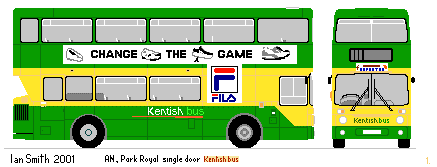
Some acquired repaints into Kentish Bus yellow and green,
which took over from maroon and cream in the mid 90s,
Luton & District, The ShiresLuton & District came into the picture in two ways. In May 1990 they bought the Stevenage depot and operations of Sovereign Bus and Coach (ex LCNE), and in October they bought London Country North-West, which had previously been bought by its management. The Watford operations retained LCNW green and grey livery, and Watford Bus fleetnames, to avoid local indignation at the use of the Luton & District fleetname! In February 1993 L&D sold the Slough depot and operations to Q-Drive. In turn, Luton & District were swallowed up by British Bus in July 1994.
But in September 1998 the end came, and the remaining buses were sold,
most of them to Guide Friday.
BTS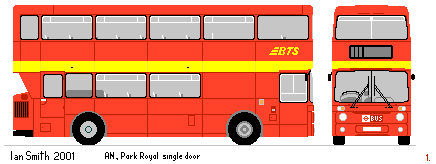 Borehamwood Travel Services bought some second-hand Atlanteans in early 1989,
for use on the 292. This service it had taken over when LCNE had their strike in 1987,
and gained it on a more permanent basis on tender in 1988. Seven of the Atlanteans were
1976-vintage AN68s with Roe bodies from Yorkshire Woollen District,
but there was also AN179 from newly-formed Sovereign,
plus AN13 as a trainer (also from Sovereign).
The service buses were smartly repainted in poppy red with yellow band and BTS fleetnames.
Borehamwood Travel Services bought some second-hand Atlanteans in early 1989,
for use on the 292. This service it had taken over when LCNE had their strike in 1987,
and gained it on a more permanent basis on tender in 1988. Seven of the Atlanteans were
1976-vintage AN68s with Roe bodies from Yorkshire Woollen District,
but there was also AN179 from newly-formed Sovereign,
plus AN13 as a trainer (also from Sovereign).
The service buses were smartly repainted in poppy red with yellow band and BTS fleetnames.
But this service required better rolling-stock, and the Atlanteans' stay was brief. They were replaced later in 1989 by six new Alexander-bodied Scanias. Some of the Atlanteans were then bought by London Country North-West, and numbered into the AN series.
|

 In October 1986 London Country South-East bought another seven second-hand Southdown Atlanteans.
They were numbered as AN500-507, (two of them being renumbered from AN338 and 342),
and went to work at Northfleet (the renumbered pair) and Swanley.
In October 1986 London Country South-East bought another seven second-hand Southdown Atlanteans.
They were numbered as AN500-507, (two of them being renumbered from AN338 and 342),
and went to work at Northfleet (the renumbered pair) and Swanley.

 A few were used for a long-term rail-replacement contract when
the North London line was closed for a while,
and acquired Network South-East colours and North London Railways fleetnames.
A few were used for a long-term rail-replacement contract when
the North London line was closed for a while,
and acquired Network South-East colours and North London Railways fleetnames.
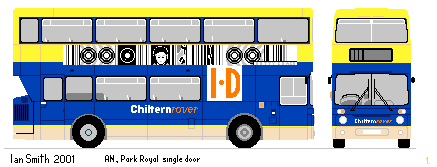 In April 1995 the company was rebranded as "The Shires",
with a new blue and yellow livery and local area operating titles.
Cowie Group took over in June 1996, and renamed Arriva in November 1997
Through this some of the Atlanteans survived.
Even one more was added: a secondhand bus from Ribble.
In April 1995 the company was rebranded as "The Shires",
with a new blue and yellow livery and local area operating titles.
Cowie Group took over in June 1996, and renamed Arriva in November 1997
Through this some of the Atlanteans survived.
Even one more was added: a secondhand bus from Ribble.
 Ian's Bus Stop
 part1
part1 part2
part2 histories